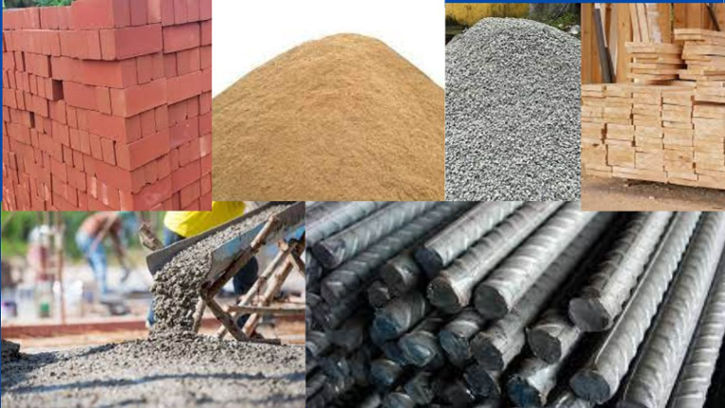
IMARC Group’s latest report, titled “Construction Materials Market by Material Type (Aggregates, Cement, Bricks and Blocks, Metals, and Others), End User (Residential, Infrastructure, Commercial, Industrial), and Region 2025-2033”, offers a comprehensive analysis of the construction materials market growth. The report also includes competitor and regional analysis, along with a breakdown of segments within the industry. the global construction materials market size reached USD 1,271.7 Million in 2024. Looking forward, IMARC Group expects the market to reach USD 1,746.9 Million by 2033, exhibiting a growth rate (CAGR) of 3.59% during 2025-2033. The growing construction of commercial and residential buildings, rising adoption of new manufacturing processes, and increasing investments by governing agencies of various countries on improving public infrastructure are some of the major factors propelling the market.
Request Free Sample Report (Exclusive Offer on this report): https://www.imarcgroup.com/construction-materials-market/requestsample
Innovative and Sustainable Solutions Reshaping the Construction Materials Landscape:
The construction materials market is experiencing a profound shift as sustainability and innovation become central to both business strategies and procurement decisions. Heightened environmental awareness from regulators and consumers alike is driving a transition toward green building materials, which include recycled, biodegradable, and low-carbon alternatives such as bamboo, hempcrete, mycelium bricks, and advanced composites. This movement aligns with global initiatives to cut construction-related CO₂ emissions, which presently account for nearly 40% of all energy-related emissions. Government incentives, such as tax breaks for energy-efficient commercial buildings and strict sustainability codes like the LEED and European Green Deal, are accelerating adoption at both project and portfolio levels.
Manufacturers and developers are rapidly advancing research and embracing innovations like self-healing concrete, carbon-negative cement, and energy-efficient insulation products, all of which promise to enhance performance standards, reduce long-term operating costs, and help meet ambitious climate commitments. Notably, the proliferation of smart technologies and digitalization—spanning from 3D printing to real-time building analytics—facilitates efficient resource use and accelerated construction times, optimizing the value chain from raw materials to finished structures. The result is a market increasingly characterized by the convergence of environmental stewardship and advanced engineering, unlocking new growth opportunities for industry leaders focused on meeting evolving sustainability criteria and future-proofing their offerings.
Market Growth Fueled by Urbanization, Infrastructure Expansion, and Demographics:
Robust growth in the construction materials sector is fundamentally underpinned by rapid urbanization, expanding infrastructure projects, and rising global populations—a combination that continues to fuel unprecedented demand. Major metropolitan areas across both emerging and developed regions are witnessing surges in construction activity, from mega-cities in Asia-Pacific to infrastructure modernization projects in North America and Europe. Governments are channeling substantial investments into transportation networks, bridges, airports, residential housing, and commercial spaces, with major legislative action seen in programs such as the U.S. Infrastructure Investment and Jobs Act and similar initiatives in Asia and the Middle East.
Diverse drivers—from the need for affordable housing to the expansion of hospitality infrastructure in support of tourism—sustain buoyant demand for core materials including cement, steel, bricks, aggregates, and innovative prefabrication solutions. In regions like China and India, policy-driven urban development, such as smart city schemes and affordable housing missions, has ensured an ongoing construction boom. Meanwhile, favorable demographics and rising per capita income support this momentum by increasing consumer demand for new-builds and renovations. Amidst this backdrop, the industry must also contend with supply chain volatility, especially concerning raw material price fluctuations and availability, making resilience and adaptiveness crucial for continued growth.
Future Demand Driven by Emerging Technologies and Next-Generation Building Practices:
The future landscape of the construction materials market will be shaped by a confluence of next-generation technologies and forward-looking building practices. Digital transformation is at the forefront, with artificial intelligence, the Internet of Things, and advanced analytics driving optimization in material selection, logistics, and onsite project management. Innovations in material science—ranging from high-performance adhesives to lightweight composites and energy-efficient glazing—are becoming mainstream, pushing the boundaries of what is possible in cost, weight reduction, resilience, and environmental impact. The adoption of modular and prefabricated construction methods, underpinned by advances in 3D printing, allow for greater customization, reduced waste, and accelerated project timelines, offering attractive solutions in high-demand urban environments.
Additionally, the integration of decentralized, on-demand material marketplaces provides seamless access to diverse suppliers and facilitates just-in-time procurement strategies, bolstering both cost efficiency and flexibility. As global building stock is projected to double over the next several decades, the pressure on the industry to deliver innovative, affordable, and eco-friendly solutions will only intensify. Companies that invest in novel R&D, strengthen supply chains for advanced materials, and adopt digital technologies stand poised to capture significant future demand and set benchmarks in both sustainability and operational excellence.
Leading key Players Operating in the Construction Materials Industry:
- Aditya Birla Management Corporation Pvt. Ltd.
- Arauco North America Inc.
- ArcelorMittal S.A.
- Boral Limited
- Cemex S.A.B. de C.V.
- CRH plc
- HeidelbergCement
- Holcim Group
- JK Cement Ltd.
- Kronoplus Limited
- Nippon Steel Corporation
- Sika AG
Construction Materials Market Trends:
The construction materials market is witnessing transformative trends that are fundamentally changing how industry players approach project development, procurement, and long-term asset management. At the core of these trends is the drive toward sustainability, which has elevated the importance and adoption of green building materials and energy-efficient technologies across markets. The rapid incorporation of AI-powered analytics and digital platforms facilitates smarter resource management and predictive maintenance, optimizing construction lifecycles. Lightweighting and advanced composite materials are being used to reduce structural loads and carbon footprints without compromising strength or durability.
Furthermore, contract models are evolving to prioritize long-term performance and value over merely upfront costs, emphasizing the selection of materials with superior lifecycle returns. The market is also benefiting from the democratization of innovation: global startups and established manufacturers alike are leveraging nanotechnology, 3D printing, and carbon capture materials, unlocking entirely new applications and efficiencies. These advancements are reshaping the traditional boundaries of the construction materials sector, allowing for rapid adaptation to changing consumer demands and regulatory landscapes. Ultimately, the trajectory is clear—companies that prioritize sustainability, embrace advanced technologies, and maintain strong supplier networks will remain at the forefront of an increasingly competitive and environmentally conscious industry.
Ask Analyst for Customization and Browse full report with TOC & List of Figure: https://www.imarcgroup.com/construction-materials-market
Key Market Segmentation:
Breakup by Material Type:
- Aggregates
- Cement
- Bricks and Blocks
- Metals
- Others
Breakup by Region:
- North America (United States, Canada)
- Europe (Germany, France, United Kingdom, Italy, Spain, Others)
- Asia Pacific (China, Japan, India, Australia, Indonesia, Korea, Others)
- Latin America (Brazil, Mexico, Others)
- Middle East and Africa (United Arab Emirates, Saudi Arabia, Qatar, Iraq, Other)
Key Highlights of the Report:
- Market Performance (2019-2024)
- Market Outlook (2025-2033)
- Porter’s Five Forces Analysis
- Market Drivers and Success Factors
- SWOT Analysis
- Value Chain
- Comprehensive Mapping of the Competitive Landscape
About Us:
IMARC Group is a leading market research company that offers management strategy and market research worldwide. We partner with clients in all sectors and regions to identify their highest-value opportunities, address their most critical challenges, and transform their businesses.
IMARC Group’s information products include major market, scientific, economic and technological developments for business leaders in pharmaceutical, industrial, and high technology organizations. Market forecasts and industry analysis for biotechnology, advanced materials, pharmaceuticals, food and beverage, travel and tourism, nanotechnology and novel processing methods are at the top of the company’s expertise.
Contact Us:
IMARC Group
134 N 4th St. Brooklyn, NY 11249, USA
USA: +1-631-791-1145 | Asia: +91-120-433-0800
Email: sales@imarcgroup.com
Follow us on Twitter: @imarcglobal
LinkedIn: https://www.linkedin.com/company/imarc-group/mycompany/
 Site Title
Leave a comment