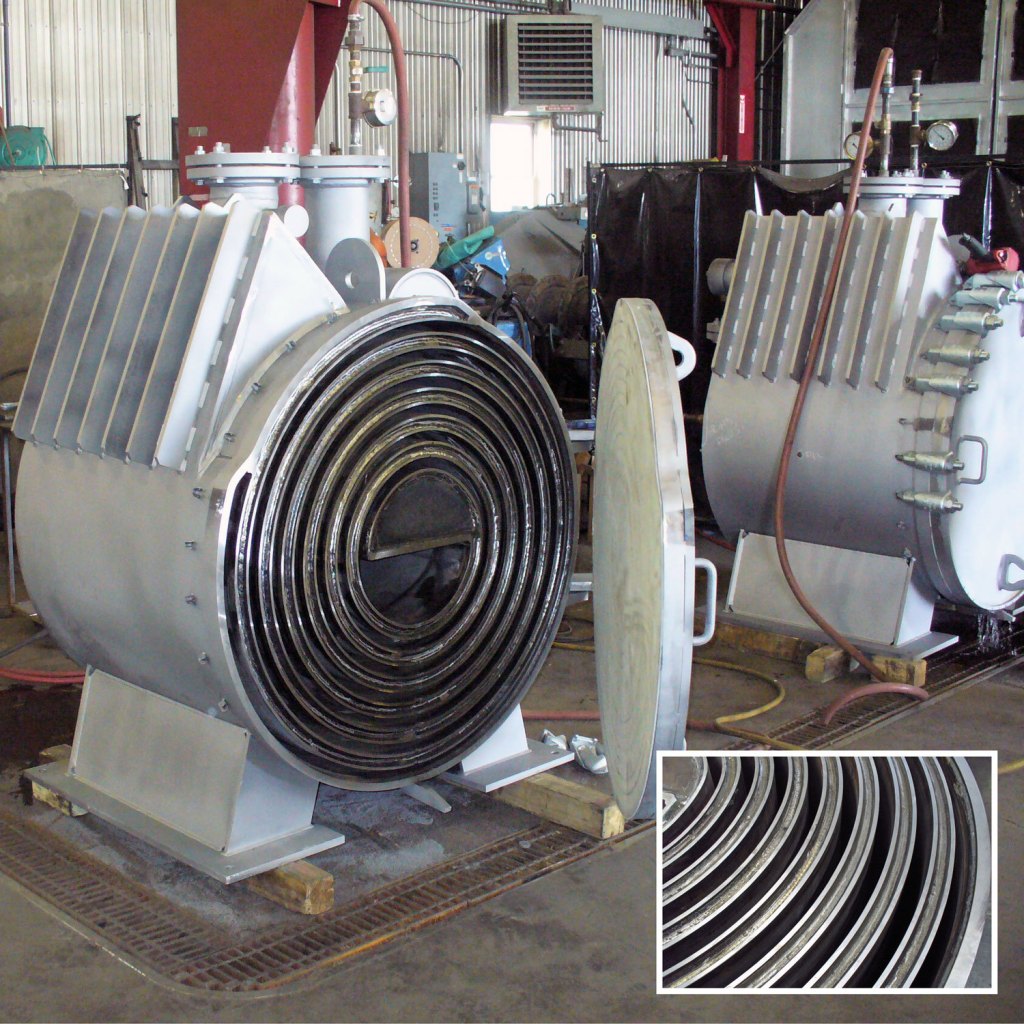
IMARC Group’s latest research report, titled “Heat Exchanger Market Report by Type (Shell & Tube, Plate & Frame, Air Cooled, and Others), Material (Carbon Steel, Stainless Steel, Nickel, and Others), End-Use Industry (Chemical, Petrochemical and Oil & Gas, HVAC and Refrigeration, Food & Beverage, Power Generation, Paper & Pulp, and Others), and Region 2025-2033,” offers a comprehensive analysis of the heat exchanger market growth. The report also includes competitor and regional analysis, along with a breakdown of segments within the industry. the global heat exchanger market size was valued at USD 20.16 Billion in 2024. Looking forward, IMARC Group estimates the market to reach USD 30.79 Billion by 2033, exhibiting a CAGR of 4.77% from 2025-2033. Europe currently dominates the market, holding a market share of over 31.8% in 2024. The market is driven by stringent environmental regulations, increasing demand for energy-efficient systems, and significant growth in the chemical, automotive, and renewable energy sectors.
Get free Sample Copy of Report at – https://www.imarcgroup.com/heat-exchanger-market/requestsample
Latest Trends Driving the Heat Exchanger Market:
The heat exchanger market is currently experiencing a wave of innovation and technological advancement, driven by the need for energy efficiency, sustainability, and system optimization across a range of industries. One of the most notable trends is the growing adoption of compact heat exchangers, which are increasingly favored due to their space-saving design, high thermal performance, and suitability for decentralized energy systems. These compact units are being extensively deployed in residential heating, ventilation, and air conditioning (HVAC) applications, as well as in automotive and aerospace systems where space constraints and thermal efficiency are critical. Simultaneously, industries are gravitating towards plate heat exchangers and shell & tube configurations equipped with corrosion-resistant materials such as titanium, stainless steel, and high-nickel alloys, which offer improved longevity in chemically aggressive or high-pressure environments. The increased implementation of renewable energy sources, such as solar thermal systems, geothermal heating, and biomass-based energy, is also influencing product design to accommodate fluctuating thermal loads and unconventional working fluids. Moreover, the integration of smart sensors and digital monitoring systems in heat exchangers is becoming a standard trend, allowing real-time diagnostics, predictive maintenance, and performance analytics that reduce operational downtime and improve energy savings.
Growth Drivers Accelerating the Heat Exchanger Market:
The heat exchanger market is witnessing strong and steady growth, underpinned by global industrial expansion, rapid urbanization, and the rising demand for energy-efficient systems. One of the primary growth drivers is the surge in power generation and industrial activity, particularly in emerging economies where infrastructure development and industrialization are gaining momentum. In thermal and nuclear power plants, heat exchangers play a vital role in energy transfer and operational stability, leading to increased investments in high-performance units capable of handling large-scale thermal loads. Similarly, the oil & gas sector remains a key growth catalyst, with upstream and downstream processes requiring robust, corrosion-resistant, and high-pressure heat exchanger systems. Another substantial growth contributor is the widespread adoption of HVAC systems across commercial, residential, and institutional spaces, driven by global warming and rising living standards. The food and beverage industry is also fueling market growth as it continues to automate and expand processing operations, which rely heavily on efficient heat transfer for pasteurization, sterilization, and temperature control. Additionally, the transition toward renewable energy sources and clean technologies has opened new avenues for heat exchanger deployment in solar thermal systems, bioenergy facilities, and heat recovery units. Increasing regulatory mandates focusing on energy conservation and carbon footprint reduction have compelled industries to adopt advanced heat exchanger technologies that align with global sustainability goals.
Future Demand Outlook for the Heat Exchanger Market:
The future demand for heat exchangers is poised for substantial growth as industries and governments worldwide pivot toward sustainable practices, energy optimization, and decarbonization initiatives. A major factor shaping future demand is the transition to green energy systems, where heat exchangers are essential for harnessing and managing thermal energy in solar, geothermal, and waste heat recovery applications. As industries move toward net-zero emissions targets, the integration of high-efficiency heat recovery solutions becomes imperative in manufacturing, refining, and chemical processing sectors. The increasing emphasis on circular economy principles is encouraging the reuse and recycling of waste heat, elevating the role of heat exchangers in driving resource efficiency and cost reduction. With smart manufacturing gaining traction, the adoption of digitally connected heat exchanger units that can provide real-time operational insights and remote diagnostics is expected to rise. These intelligent systems will facilitate predictive maintenance, improve thermal efficiency, and reduce unplanned downtimes, offering long-term value and energy savings to end users. In urban environments, the growth of district heating and cooling systems is projected to significantly increase the demand for heat exchangers capable of managing variable loads and integrating multiple energy sources. Moreover, the global rise of data centers and advanced computing infrastructure requires precise thermal regulation, where compact, liquid-cooled heat exchangers are gaining preference over traditional air-cooling systems.
Leading Key Players Operating in the Heat Exchanger Industry:
- Alfa Laval
- API Heat Transfer Inc.
- Danfoss
- General Electric Company
- Hisaka Works
- IHI Corporation
- Johnson Controls
- Kelvion Holding GmbH
- Koch Industries
- Lytron Inc.
- Mersen
- Modine Manufacturing
- Royal Hydraulics
- Sondex A/S
- Xylem Inc
Heat Exchanger Market Trends:
The heat exchanger market is experiencing a transformative shift shaped by technological evolution, changing energy landscapes, and environmental imperatives. One of the most significant trends is the increasing demand for compact and high-efficiency heat exchangers that are capable of operating under varying temperature and pressure conditions. This demand is driven by industries seeking to optimize energy consumption while minimizing space and operational costs. The rise in decentralized and renewable energy systems has prompted the design of heat exchangers tailored for low-carbon applications, including solar thermal collectors, biomass boilers, and geothermal heat pumps. These systems require materials and configurations that support both thermal efficiency and long-term durability, encouraging the development of innovative alloys and advanced manufacturing methods.
Digitalization is another major trend influencing the market. The incorporation of smart sensors, IoT connectivity, and cloud-based monitoring is enabling real-time performance tracking and predictive maintenance, thereby reducing system downtime and extending equipment life cycles. In addition, the growing focus on industrial sustainability is prompting companies to invest in heat recovery systems that utilize waste heat from production processes to reduce energy use and emissions. The HVAC sector, in particular, is transitioning toward energy-efficient systems with integrated heat exchangers that meet stricter environmental regulations and performance standards. Furthermore, there is a growing trend toward modular and scalable heat exchanger units, especially in sectors such as pharmaceuticals, data centers, and chemicals, where flexibility and process adaptability are crucial. As industries continue to evolve, heat exchangers are being engineered with enhanced corrosion resistance, thermal conductivity, and compact design—making them indispensable tools in future-ready, energy-conscious systems.
Do you know more information, Contact to our analyst at– https://www.imarcgroup.com/heat-exchanger-market
Heat Exchanger Market Report Segmentation:
Breakup by Type:
- Shell & Tube
- Plate & Frame
- Air Cooled
- Others
Shell and tube heat exchangers hold the largest market share thanks to their durability, reliability, and efficiency in handling wide temperature ranges.
Breakup by Material:
- Carbon Steel
- Stainless Steel
- Nickel
- Others
The preference for stainless steel stems from its excellent thermal conductivity, long service life, and low maintenance.
Breakup by End-Use Industry:
- Chemical
- Petrochemical and Oil & Gas
- HVAC and Refrigeration
- Food & Beverage
- Power Generation
- Paper & Pulp
- Others
The chemical industry is the major segment, as it relies heavily on heat exchangers to optimize production efficiency and ensure process safety.
Breakup by Region:
- North America (United States, Canada)
- Asia Pacific (China, Japan, India, Australia, Indonesia, Korea, Others)
- Europe (Germany, France, United Kingdom, Italy, Spain, Others)
- Latin America (Brazil, Mexico, Others)
- Middle East and Africa (United Arab Emirates, Saudi Arabia, Qatar, Iraq, Other)
The chemical industry is the major segment, as it relies heavily on heat exchangers to optimize production efficiency and ensure process safety.
About Us:
IMARC Group is a leading market research company that offers management strategy and market research worldwide. We partner with clients in all sectors and regions to identify their highest-value opportunities, address their most critical challenges, and transform their businesses.
IMARC’s information products include major market, scientific, economic and technological developments for business leaders in pharmaceutical, industrial, and high technology organizations. Market forecasts and industry analysis for biotechnology, advanced materials, pharmaceuticals, food and beverage, travel and tourism, nanotechnology and novel processing methods are at the top of the company’s expertise.
Contact Us:
IMARC Group
134 N 4th St. Brooklyn, NY 11249, USA
Email: sales@imarcgroup.com
Tel No:(D) +91 120 433 0800
United States: +1-631-791-1145

 Site Title